
Bisher habe ich vor allem von der Schule erzählt. Aber eigentlich fehlt noch die Geschichte des Ortes, an dem ich hier drei Tage in der Woche bin. Und diese Geschichte lässt sich nicht in drei Sätzen erzählen. Wer also bis zum Ende durchhält, bekommt meinen ausdrücklichen Respekt – und gedanklich einen Kaffee.
Ein Ort mitten in Philippi
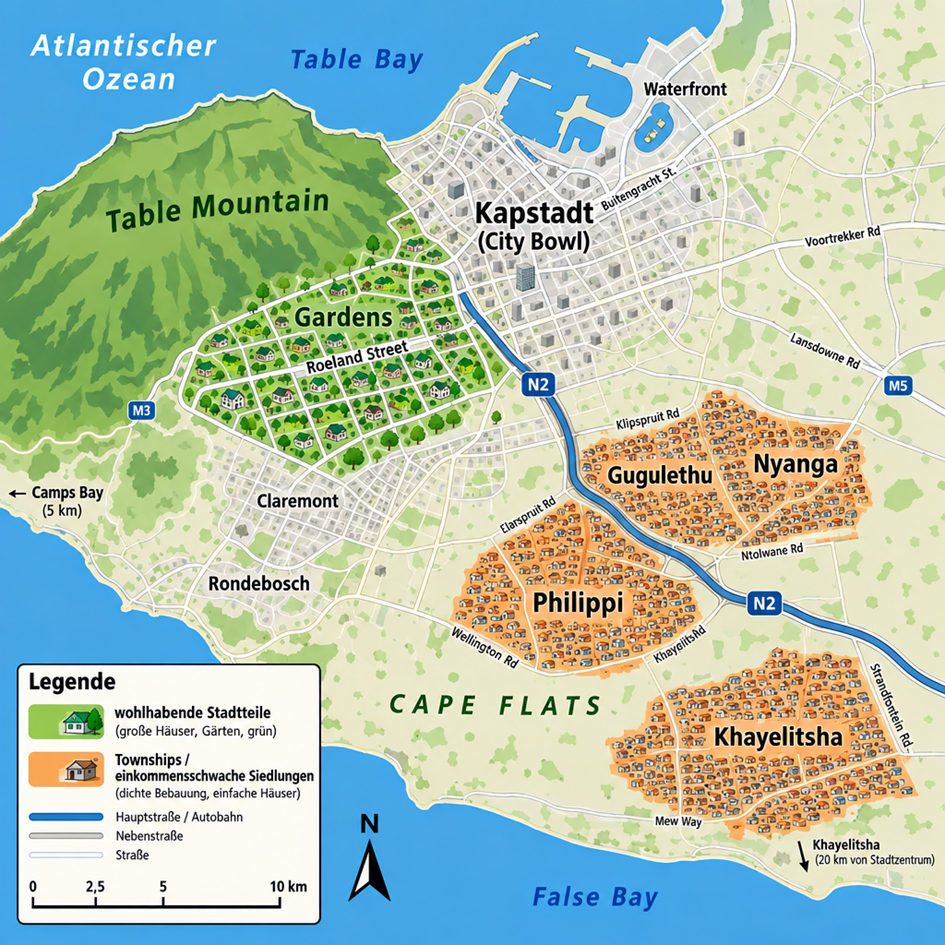
Die Schule ist Teil des lutherischen Gemeindezentrums Ithemba Labantu im Township Philippi. Der Name stammt aus dem IsiXhosa und bedeutet ungefähr „Hoffnung für die Menschen“. Das klingt groß. Wenn man sieht, was hier jeden Tag geschieht, wirkt es aber keineswegs übertrieben.
Um diesen Ort zu verstehen, muss man zumindest kurz auf die Geschichte Südafrikas schauen. Während der Apartheid wurden Menschen nach ihrer Hautfarbe kategorisiert und gezwungen, in den ihnen zugewiesenen Gebieten zu leben. Auch Geld, Infrastruktur, Schulen, Rechte und Zukunftschancen wurden nach dieser rassistischen Einteilung verteilt: Weiße standen ganz oben, danach folgten weitere Abstufungen – und schwarze Menschen hatten die wenigsten Rechte, Mittel und Möglichkeiten.
Dieses grausame System schuf nicht nur Armut und Ausgrenzung. Es schürte zusätzlich Misstrauen, Hass und Gewalt zwischen verschiedenen Bevölkerungsgruppen. Die Apartheid ist offiziell vorbei, ihre Folgen sind es nicht. Bis heute leben in den Townships fast ausschließlich nichtweiße Menschen. Die Armut, die man dort sieht, ist für mich kaum mit dem vergleichbar, was ich aus Europa kenne. Die Arbeitslosigkeit liegt in vielen Townships bei ungefähr 40 Prozent.
Auch die Unterschiede im Bildungssystem sind gewaltig. Am Ende der Schulzeit gibt es das Matric. Einen gestuften Weg mit Hauptschul- oder Realschulabschluss, über den später trotzdem eine gute Ausbildung möglich ist, gibt es so nicht. Vereinfacht gesagt heißt es häufig: Matric oder kein Abschluss. Wer keinen schafft, hat es enorm schwer, durch Ausbildung und Arbeit gesellschaftlich aufzusteigen.
Aber auch heute zeigen die Schulen, aus welcher Gegend man kommt: Eine Schule im Township hat eine Bestehensrate von manchmal nur 38 %, eine gute Schule 100 %. Das bedeutet, dass in Townships bis zu 68 % der Menschen ohne Abschluss die Schule verlassen. In den Townships sind bis zu 20 % der Menschen funktionelle Analphabeten.
Südafrika zeigt auf sehr engem Raum zwei völlig unterschiedliche Welten: großen Reichtum und bittere Armut – sichtbar für alle, die hinsehen möchten.
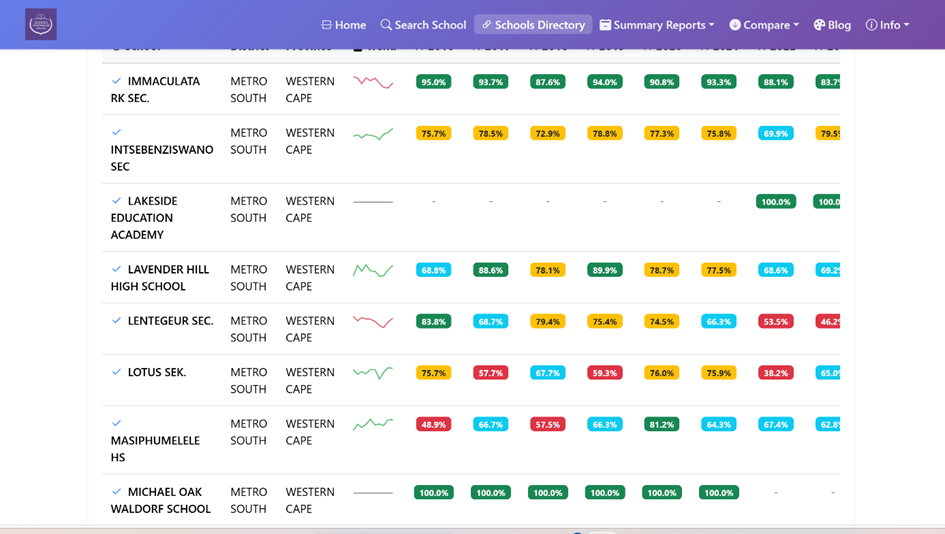
School Performance 2025 – Matric Results & Ranking Dashboard – Matric Performance
Die gefährliche Kreuzung
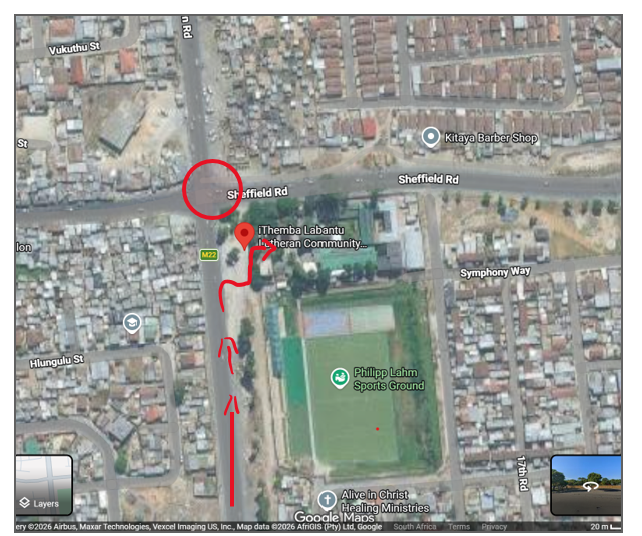
Ithemba Labantu liegt an der Kreuzung von New Eisleben Road und Sheffield Road. Die Pfeile auf meiner Karte zeigen unsere Anfahrt; der Kreis markiert eine der gefährlichsten Kreuzungen im Township. Wir versuchen, vorher so früh wie möglich abzubiegen. Niemals bin ich über diese Kreuzung gefahren. Octavious hat diese Kreuzung 3 m vom Eingang der Schule in den letzten 5 Jahren nicht überquert.
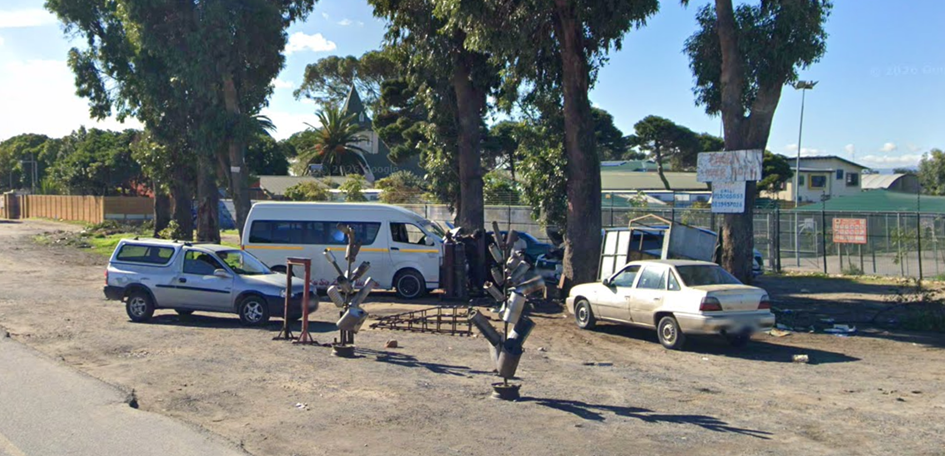
Auf einem weiteren Bild, das ich aus Google Maps habe, sieht man direkt davor eine improvisierte Autowerkstatt unter freiem Himmel. Der Asphalt wurde aufgebrochen und für die Reparatur eines Autos eine Grube ausgehoben. Das hat mit dem Zentrum eigentlich nichts zu tun – aber ich fand es so faszinierend, dass es unbedingt in diesen Bericht musste.
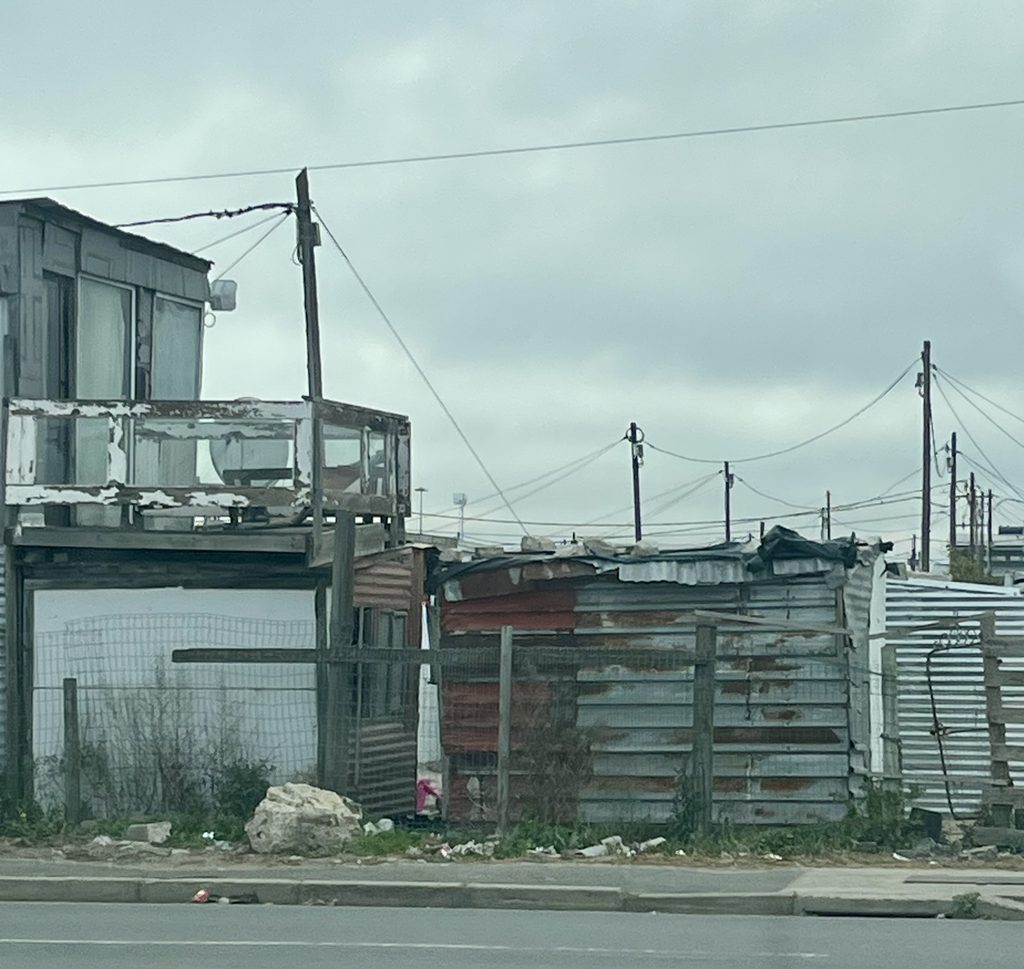
So sehen die Häuser gegenüber der Schule aus.
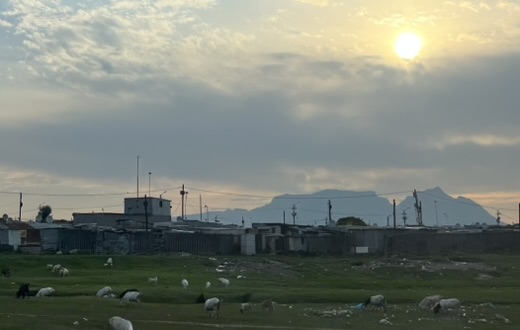
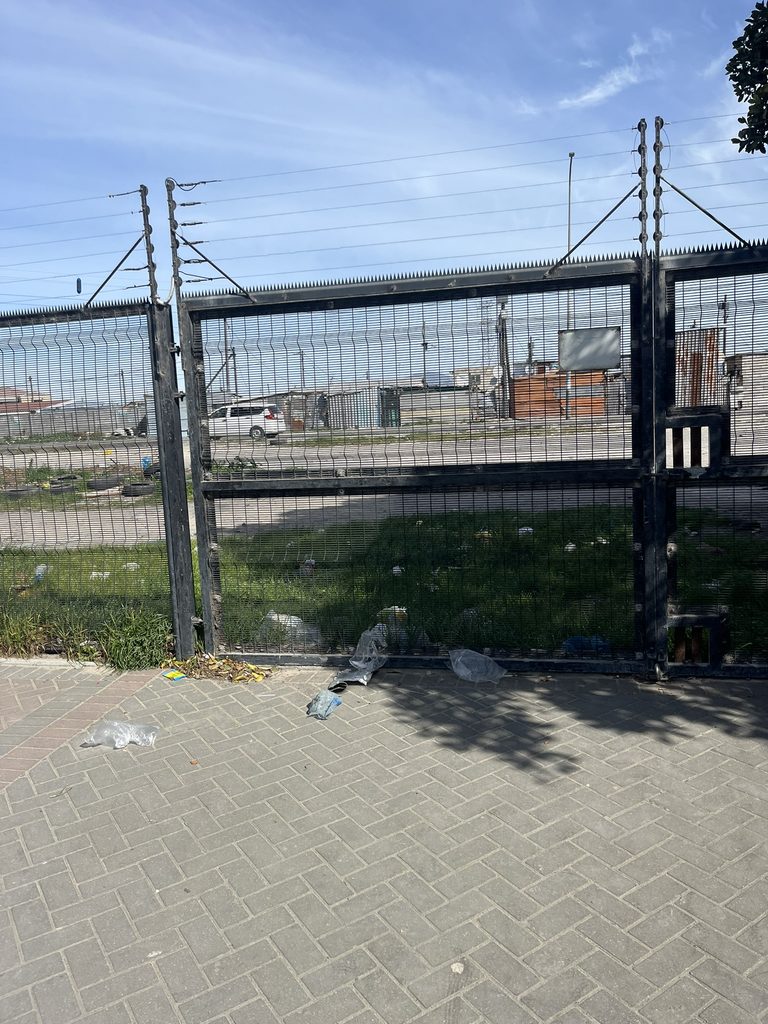
Morgens ruft Octavious in der Schule an, wenn wir noch ungefähr einen Kilometer entfernt sind, und fragt, ob die Strecke sicher ist. Nicht immer lautet die Antwort Ja. Dann drehen wir um, trinken an einer Tankstelle einen Kaffee und warten, bis die Straße wieder befahrbar ist.
Kreuzungen sind besonders gefährliche Orte für Überfälle. Angreifer warten am Straßenrand, blockieren die Flucht, schlagen mit einem Ziegelstein die Autoscheibe ein und rauben die Menschen aus. Auch Lehrkräfte der Schule haben das auf dem Arbeitsweg erlebt.
Das ist schwer aufzuschreiben. Noch schwerer ist vermutlich, dass es für viele Menschen hier zum Alltag gehört.
Wie aus einem Hospiz ein Gemeindezentrum wurde
Vor etwa 25 Jahren wurde das Gemeindezentrum von dem deutschen Pfarrer Otto Kohlstock übernommen, der damals bereits seit Jahrzehnten in Südafrika gelebt und gearbeitet hatte.
Die Geschichte der vergangenen Jahre lässt sich für mich mit zwei Fragen zusammenfassen: Was wird gerade gebraucht? Und wie kann Hilfe zur Selbsthilfe gelingen?
Damals war HIV/AIDS ein allgegenwärtiges und noch relativ neues Thema. Das Zentrum wurde zunächst zu einem AIDS-Hospiz. Menschen aus der Gemeinschaft brachten Erkrankte hierher, damit sie in Würde sterben konnten. Weil auch die Angehörigen etwas zu essen brauchten, entstand eine Küche. Dann wurde eine Betreuung für Kinder benötigt. Daraus entwickelten sich ein Kindergarten, eine Grundschule und nach und nach viele weitere Angebote. Das Hospiz wurde nicht mehr benötigt, weil ein Krankenhaus in der Nähe gebaut wurde.
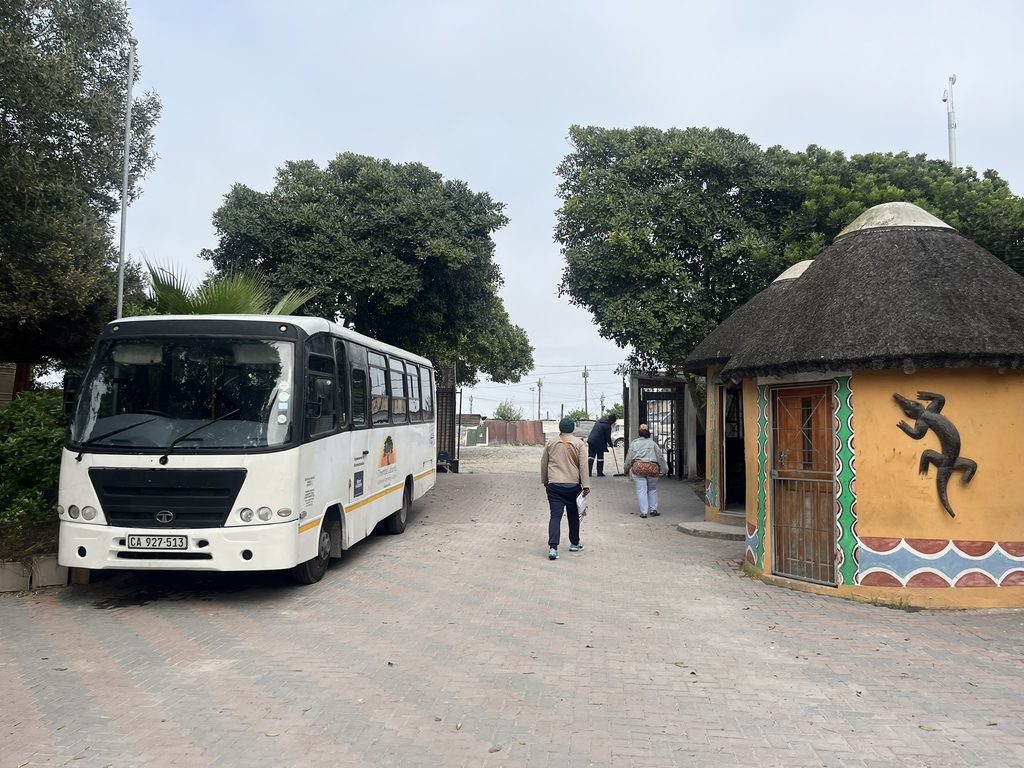
Heute liegt das Zentrum geschützt hinter hohen Mauern und einem großen Eisentor. Im Inneren befinden sich unter anderem:
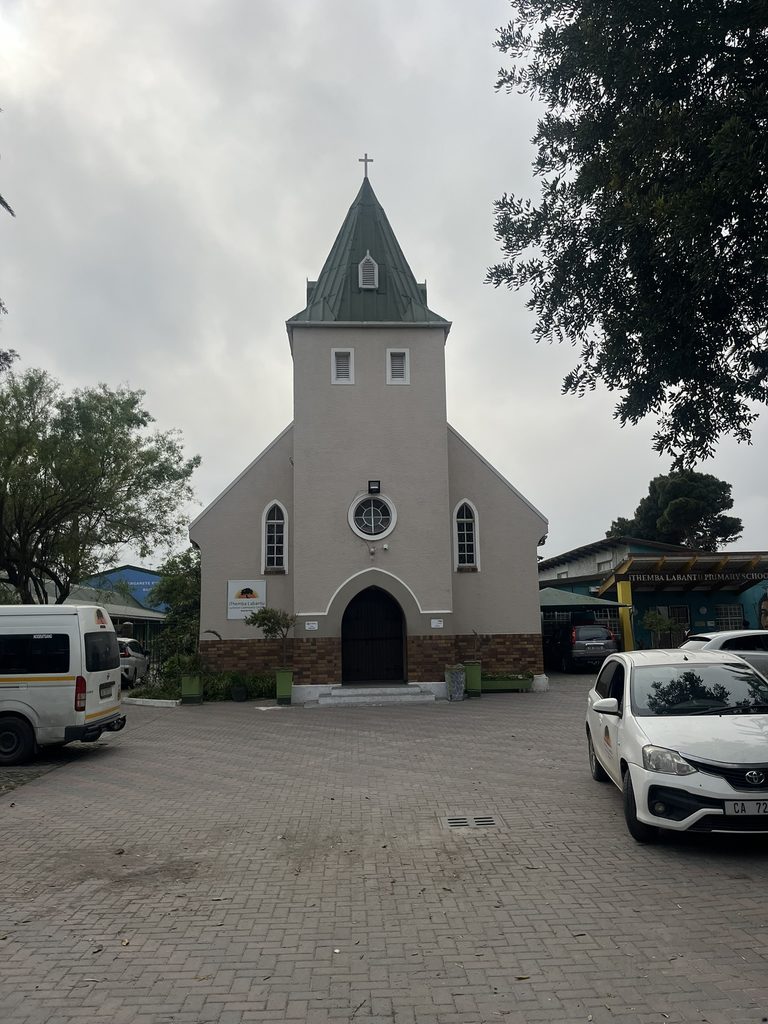
- eine Kirche,
- ein Kindergarten,
- eine Küche, die die Schülerinnen und Schüler versorgt,
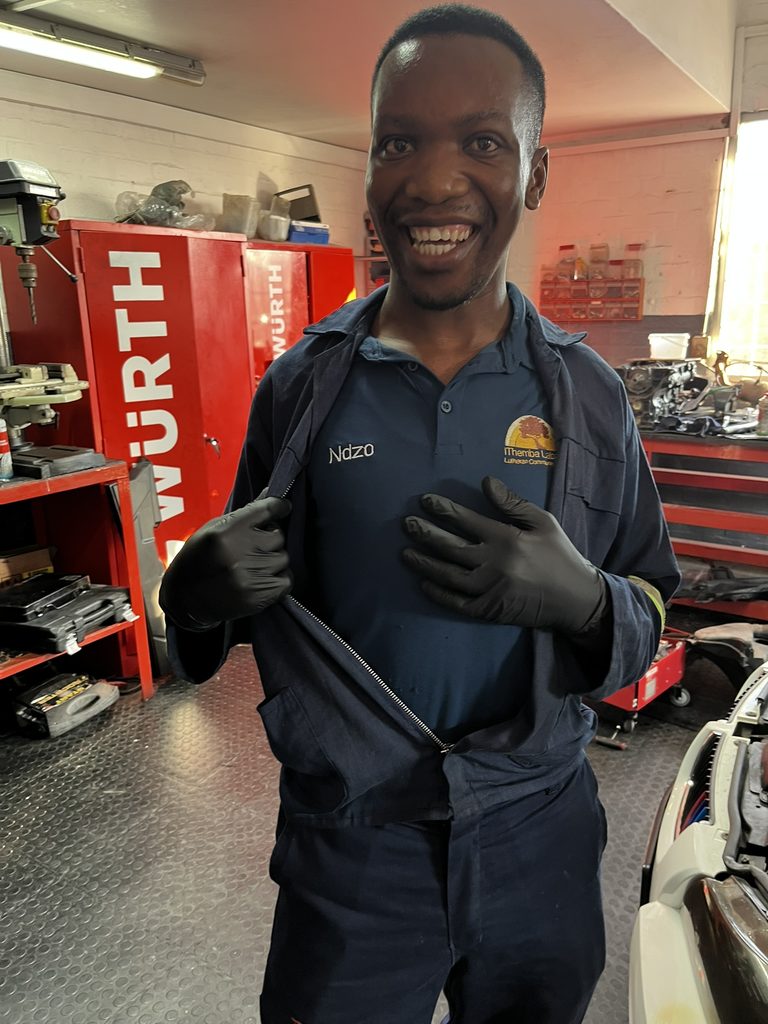
- ein Ausbildungszentrum für junge Erwachsene als Mechaniker in einer Autowerkstatt,
- Ausbildungskurse zu Solar-Warmwassersystemen,
- eine Kochausbildung,
- eine Keramikwerkstatt,
- Handarbeitsangebote, bei denen beispielsweise Weihnachtsschmuck für den Verkauf entsteht,
- und die Schule mit den Klassen 1 bis 9.
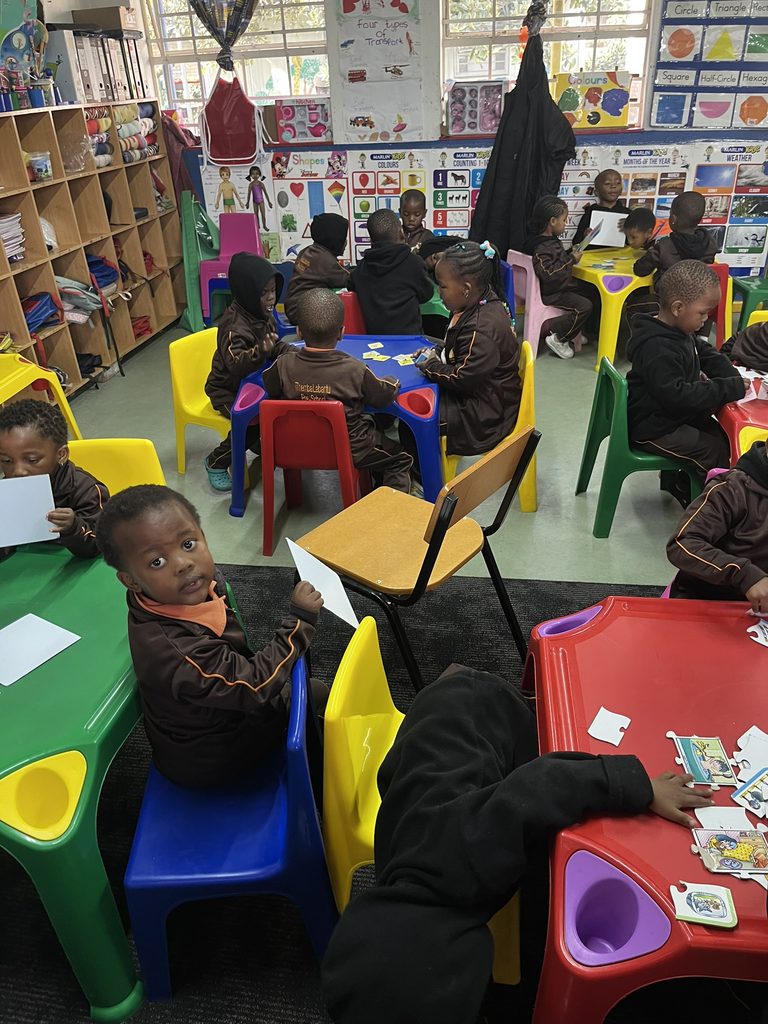
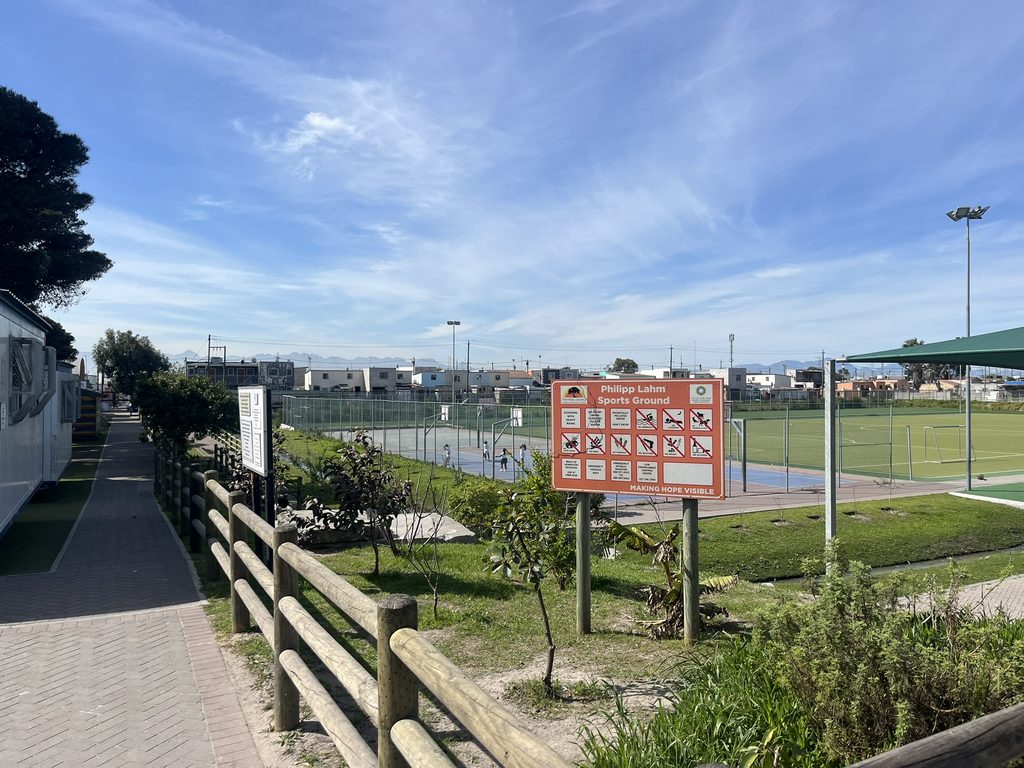
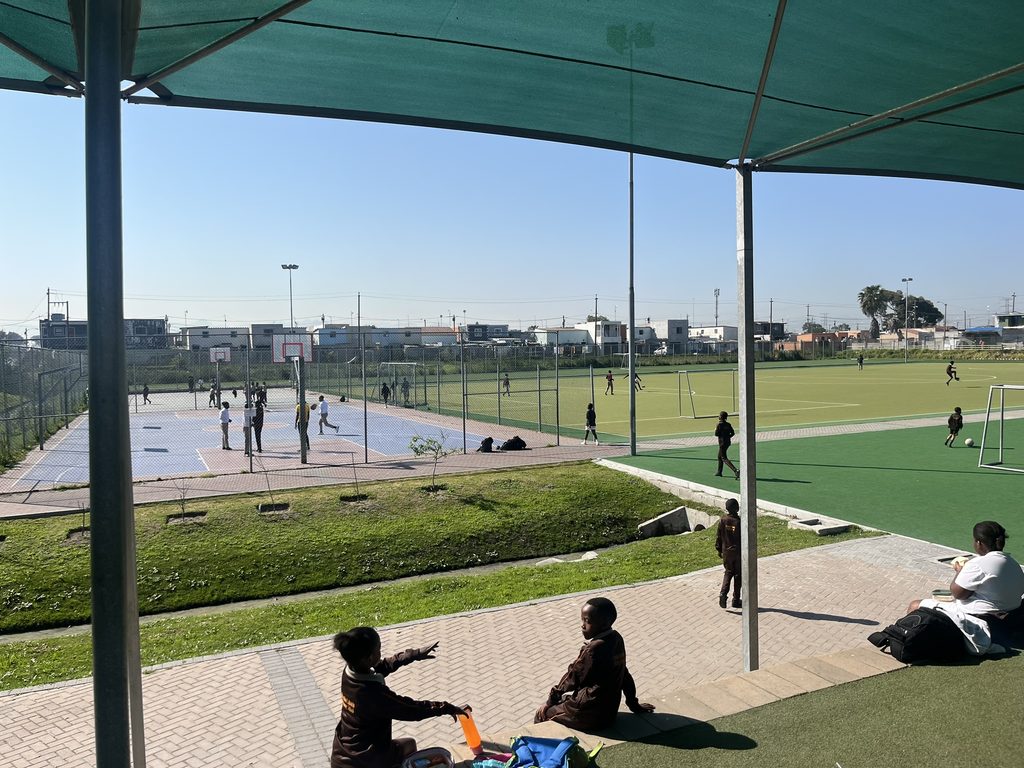
Nach dem Unterricht öffnet sich das Zentrum für die Nachmittagsbetreuung. Rund 200 weitere Kinder nutzen Sportangebote, Bücherei und Hausaufgabenhilfe. Die Philipp-Lahm-Stiftung hat einen großen Sportplatz gespendet. Wirklich ein Segen für das Zentrum. Er wird von morgens bis nachmittags multifunktional genutzt: Sport, Training, Schülervollversammlung, Pausenhof, Schüleraktionen wie der Colour Run, und auch ich habe ihn schon für bewegten Unterricht genutzt. Besonders als Pausenhof beobachte ich, wenn ich Pausenaufsicht habe, was ich echt nicht so cool finde. Ich dachte, wenigstens das muss ich nicht machen, aber so ist es halt: Bei Kindern, die sich viel mehr bewegen, ist in Deutschland die Pause ein statisches Ausharren, heimlich am Handy dahinvegetieren, aber durch die Bälle und Basketballkörbe powern sich die Schüler richtig aus. Klar, die coolen 8er und 9er hängen im Eck wie alle Teenager auf der Welt.
Außerdem gibt es die Morning Class. Dort lernen Kinder ohne offizielle Papiere zunächst lesen, schreiben und rechnen. Gleichzeitig versucht das Zentrum, ihre rechtliche Situation zu klären, damit sie überhaupt eine Chance erhalten, in das reguläre Schulsystem aufgenommen zu werden.
Ithemba Labantu ist damit nicht nur ein Gemeindezentrum, sondern auch ein großer Arbeitgeber. Den Menschen wird hier nichts einfach geschenkt. Es werden Bildung, Ausbildung, Arbeit und damit echte Perspektiven ermöglicht.
Mein Platz ist die Schule
Ich selbst arbeite ausschließlich in der Schule. Im Kindergarten war ich zwar ein paarmal, aber das ist nicht ganz meine Welt. Die Kinder sind mir schlicht zu klein. 😊
Die Lehrkräfte hier verdienen deutlich weniger als Lehrkräfte an staatlichen südafrikanischen Schulen. Trotzdem sind sie hoch motiviert und leisten Außergewöhnliches.
Auch der Arbeitsalltag funktioniert anders. Wenn ich ein Arbeitsblatt brauche, schicke ich es an die Schulsekretärin, damit sie es ausdruckt. Theoretisch ganz einfach. Praktisch gibt es an einem Tag kein Papier, am nächsten keinen Toner und am dritten keinen Strom. Also ist es immer spannend: Mit welchen Möglichkeiten wird heute unterrichtet?
Ich würde trotzdem nicht einfach sagen, hier herrsche nur Mangel. Treffender ist: Mit unglaublich wenig wird unglaublich gute Arbeit geleistet.
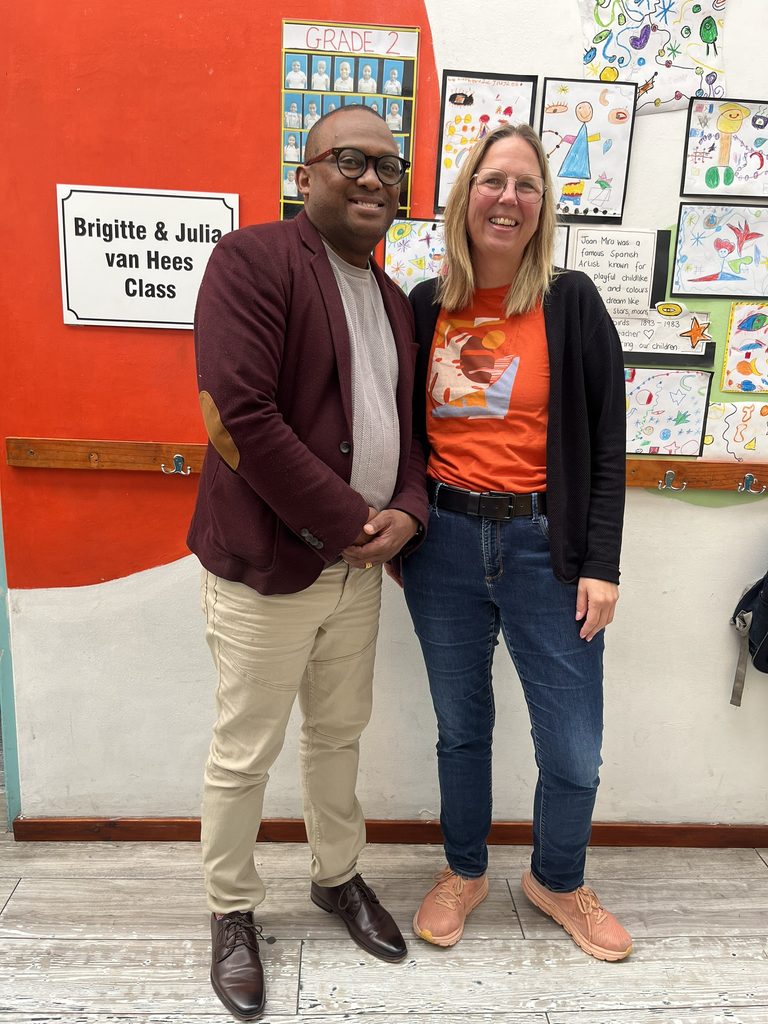
Viele Menschen übernehmen gleich mehrere Aufgaben. Steve ist dafür ein wunderbares Beispiel. Er war Polizist, ist promovierter Religionspädagoge und ausgebildeter Lehrer – und nebenbei einer der sympathischsten Menschen, die ich hier kennenlernen durfte.
Freitags findet immer ein Gottesdienst statt. Einen habe ich bisher miterlebt, und Steve hielt die Predigt. Ich bin kein religiöser Mensch und verlasse Kirchen normalerweise mit einer eher überschaubaren Erinnerung daran, welche Bibelstelle gerade vorkam und was genau die Botschaft war. Dieses Mal war es anders. Seine Worte haben mich berührt, und ich habe wirklich etwas mitgenommen.
Es war ein besonderer Gottesdienst: eine starke Predigt, großartiger Gesang und Menschen, die sich zur Musik bewegten und zugleich aufmerksam zuhörten. Der Chor wird vom Ausbilder der Kochklasse geleitet, die Orgel spielt der Schulbusfahrer. Überhaupt übernehmen hier viele Menschen die unterschiedlichsten Aufgaben – und zwar nicht halbherzig nach dem Motto „Wird schon irgendwie gehen“, sondern richtig gut.
Manchmal ist schon der Schulweg ein Abenteuer
Ich wurde von allen unglaublich herzlich aufgenommen. An manchen Tagen kann Octavious uns allerdings nicht fahren. Dann wird bereits der Weg zur Schule zum Abenteuer.
Niki und ich nehmen zunächst ein Uber nach Pinelands, ungefähr 30 Minuten. Dort steigen wir zu Sharon ins Auto und fahren an den Rand des Townships. Dabei kommen wir auch an der Ampel vorbei, an der Sharon überfallen wurde. Ein Ziegelstein zertrümmerte ihre Scheibe, sie wurde mit einer Waffe bedroht und ausgeraubt. Bis heute ist sie nervös, wenn wir diese Kreuzung überqueren. Wie sollte es auch anders sein?
Wir stellen ihr Auto an einer Tankstelle ab, überqueren eine vierspurige Straße und warten auf der anderen Seite an einer Bushaltestelle. Dort kommen weitere Lehrkräfte in weißen Kleinbussen an – typisch für Südafrika und eigentlich schon wieder eine eigene Geschichte wert. Schließlich steigen wir gemeinsam in den Schulbus, fahren durch das Township und sammeln unterwegs weitere Mitarbeitende und Schülerinnen und Schüler ein.
Alles zusammen dauert fast anderthalb Stunden. Mittags geht es denselben Weg zurück.
Nach einer dieser kleinen „Erlebnisreisen“ traf uns Steve an der Tankstelle. Er wollte warten, bis wir alle sicher abgefahren waren. Wir schickten ihn schließlich nach Hause. Fünf Minuten später rief er trotzdem noch einmal an, nur um sicherzugehen, dass uns nichts passiert war.
Genau das meine ich, wenn ich von den Menschen hier erzähle: Sie sind klug, aufmerksam, herzlich und beeindruckend.
Auch Octavious, der Schulleiter, ist ein Tausendsassa. Er hat die Schule mit aufgebaut, leitet sie seit mehr als elf Jahren, unterrichtet, kauft Papier, Tee und alles andere, was gerade fehlt, und organisiert vermutlich noch hundert Dinge, von denen ich nichts mitbekomme – etwa den Anschluss für die Schülerinnen und Schüler nach Klasse 9. Bei all dem bleibt er wertschätzend und freundlich und vielleicht manchmal ein wenig zerstreut.
Erst mit jeder weiteren Woche begreife ich, wie wertvoll die Arbeit hier ist und wie viel ich selbst lernen kann. Ich fühle mich gesehen, wertgeschätzt und in die Gemeinschaft aufgenommen.
Anders – und manchmal erstaunlich ähnlich
Ich erlebe hier einen Schulalltag, der sich stark von meinem in Deutschland unterscheidet. Gleichzeitig ist im kleinen Kosmos Schule weltweit vieles erstaunlich ähnlich.
Anders: Toilettenpapier gibt es nur im Klassenraum. Jede Schülerin und jeder Schüler holt sich bei mir als Lehrkraft die benötigte Menge ab. Zwei Rollen pro Tag, mehr gibt es nicht.
Gleich: Je langweiliger der Unterricht, desto größer die plötzliche Fluchtbewegung Richtung Toilette. Manche pädagogischen Naturgesetze gelten offenbar weltweit.
Anders: Die Anwesenheit der Schülerinnen und Schüler ist deutlich höher als an meiner Schule. Während des Schuljahres gibt es fast keine Fehlzeiten. Erst gegen Ende eines Terms ändert sich das etwas.
Warum kommen die Kinder so zuverlässig? Bildung besitzt einen hohen Stellenwert. Außerdem gibt es eine kostenlose warme Mahlzeit. Vor allem aber ist die Schule ein sicherer Ort – ohne Drogen, Alkohol und Waffengewalt.
Wie alltäglich Gewalt außerhalb der Schule ist, zeigt eine Begegnung, die mich bis heute beschäftigt. Nachdem ein ehemaliger Schüler erschossen worden war, erzählte mir eine Kollegin:
„Ich wohne im Haus daneben. Ich kam gerade nach Hause und habe die Männer weggehen sehen. Jeder weiß, wer es war. Niemand wird etwas sagen. Ich möchte leben.“
Am Montag erschien sie pünktlich zur Arbeit. Der Bruder des Getöteten ist Schüler an unserer Schule. Auch er kam am Montag zum Unterricht.
Für mich ist das kaum vorstellbar – und doch irgendwie begreiflich. Der Alltag geht weiter, weil er weitergehen muss.
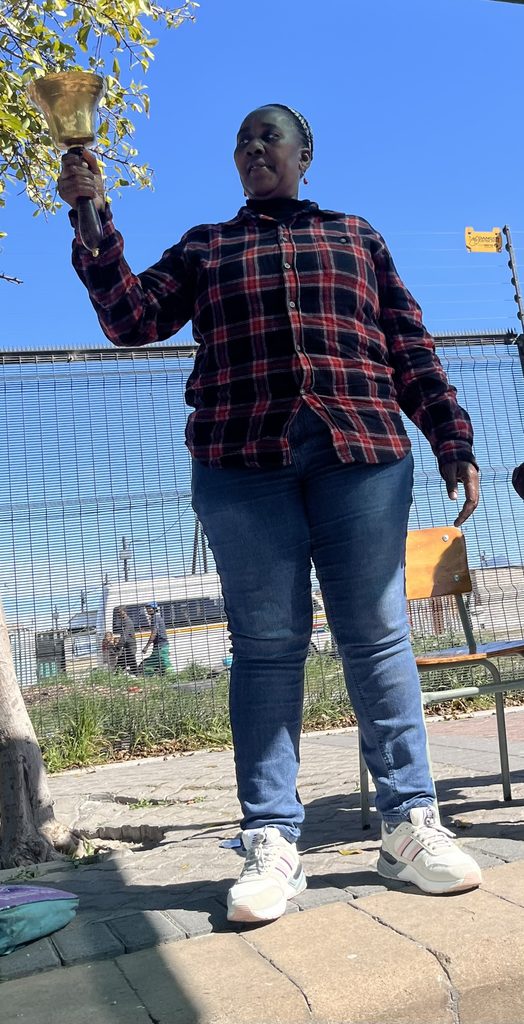
Anders: Die Glocke wird von Hand geläutet. Die Klassen stellen sich auf und gehen gemeinsam in die Pause oder zurück in ihre Räume. Bei etwa 200 Schülerinnen und Schülern funktioniert das erstaunlich gut.
Anders: Es gilt ein absolutes Handyverbot. Alle akzeptieren es. Niemand diskutiert darüber, niemand stellt es grundsätzlich infrage.
Und dabei ist der Schulweg hier tatsächlich gefährlich. Ein Schüler aus Klasse 4 war zwei Stunden nach Unterrichtsschluss noch auf dem Gelände. Ich fragte ihn, worauf er warte. Auf eine Mitfahrgelegenheit, sagte er.
„Wohnst du weit weg?“
„Nein, etwa zehn Minuten zu Fuß. Aber ich habe heute meinen Ball dabei und Angst, dass ich verprügelt werde. Dann warte ich lieber – und behalte meinen Ball.“
Ein Satz, der so beiläufig gesagt wurde und doch so viel erzählt.
Anders: Die Abschlussnoten und Durchschnittswerte jeder Schule werden veröffentlicht.
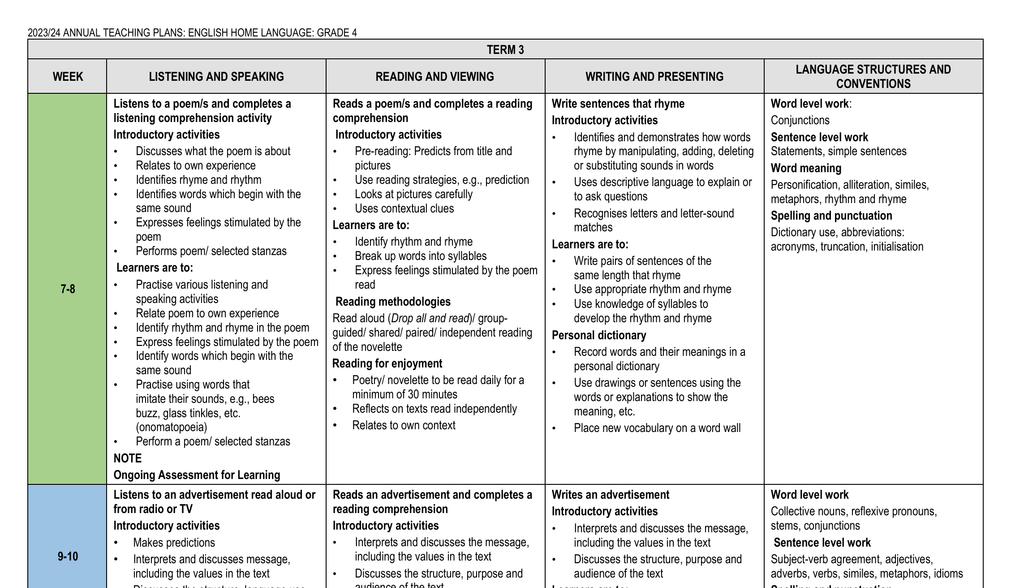
Anders: Der Bildungsplan gibt wochenweise sehr genau vor, was behandelt werden soll. Zuerst dachte ich: großartig, dann kann ich sofort passend unterrichten. In der Praxis ist der Plan jedoch so voll, dass Themen häufig nur durchgehetzt werden. Auf dem Papier sind sie dann behandelt – aber ob wirklich alle Kinder, besonders die schwächeren, mitgekommen sind, ist eine andere Frage.
Dabei darf man nicht vergessen: Die Muttersprache der meisten Kinder ist IsiXhosa, der Unterricht findet aber vollständig auf Englisch statt. Viele sprechen Englisch fast nur in der Schule. Das ist noch einmal eine ganz andere Herausforderung.
Warum ich das alles aufschreibe
Das ist nun ein sehr langer Blogeintrag geworden. Wer wirklich bis hierher gelesen hat: Danke!
Ich habe ein großes Bedürfnis, von meinen Erlebnissen zu erzählen. Vielleicht auch deshalb, weil ich fürchte, später vieles zu vergessen, wenn ich wieder in Deutschland bin und mein Alltag mich zurückhat.
Und wenn ich irgendwann alt und grau bin, kann ich diesen Text lesen und mich erinnern: an die Schule, an das von Hand geläutete Pausenzeichen, an zwei Rollen Toilettenpapier pro Tag, an Umwege und Tankstellenkaffee, an mutige Kinder und an Menschen, die mit wenig Mitteln Großes schaffen.
Vor allem aber werde ich mich daran erinnern, wie herzlich ich hier aufgenommen wurde – und wie viel Hoffnung tatsächlich in einem Ort stecken kann, der Ithemba Labantu heißt.
What Is Ithemba Labantu, Actually?
So far, I have mainly talked about the school. But I have not yet really told you about the history of the place where I spend three days a week. And this story cannot be told in three sentences. So, anyone who makes it to the end has my explicit respect – and, mentally, a coffee.
A Place in the Middle of Philippi
The school is part of the Lutheran community centre Ithemba Labantu in the township of Philippi. The name comes from isiXhosa and roughly means ‘hope for the people’. That sounds grand. But when you see what happens here every day, it does not seem exaggerated at all.
To understand this place, you have to take at least a brief look at South African history. During apartheid, people were categorised according to their skin colour and forced to live in the areas assigned to them. Money, infrastructure, schools, rights and future opportunities were also distributed according to this racist classification: white people were at the top, followed by further levels of privilege – and Black people had the fewest rights, resources and opportunities.
This cruel system created not only poverty and exclusion. It also fuelled distrust, hatred and violence between different population groups. Apartheid is officially over, but its consequences are not. To this day, townships are inhabited almost exclusively by non-white people. The poverty you see there is difficult for me to compare with anything I know from Europe. Unemployment is around 40 per cent in many townships.
The differences in the education system are also enormous. At the end of secondary school, students take the Matric. There is no tiered system with qualifications comparable to a Hauptschulabschluss or Realschulabschluss that would still allow someone to pursue good vocational training later on. Put simply, it often means: Matric or no qualification. Anyone who does not pass has an extremely difficult time improving their social position through education and employment.
Even today, schools show which area someone comes from: a school in a township may have a pass rate of only 38 per cent, while a good school may achieve 100 per cent. This means that in townships, up to 68 per cent of people leave school without a qualification. In the townships, up to 20 per cent of people are functionally illiterate.
South Africa shows two completely different worlds within a very small area: great wealth and bitter poverty – visible to anyone who is willing to look.
The Dangerous Intersection
Ithemba Labantu is located at the intersection of New Eisleben Road and Sheffield Road. The arrows on my map show our route; the circle marks one of the most dangerous intersections in the township. We try to turn off as early as possible before reaching it. I have never driven across this intersection. Octavious has not crossed it from the school entrance, only about three metres away, in the past five years.
In another picture I took from Google Maps, you can see an improvised open-air car workshop directly in front of it. The asphalt has been broken up and a pit has been dug to repair cars. This actually has nothing to do with the centre – but I found it so fascinating that it absolutely had to be included in this report.
Every morning, when we are still about one kilometre away, Octavious calls the school and asks whether the route is safe. The answer is not always yes. In that case, we turn around, have a coffee at a petrol station and wait until the road is safe to use again.
Intersections are particularly dangerous places for robberies. Attackers wait at the roadside, block the escape route, smash car windows with a brick and rob the occupants. Teachers from the school have experienced this on their way to work as well.
This is difficult to write about. It is probably even more difficult that, for many people here, it is part of everyday life.
How a Hospice Became a Community Centre
About 25 years ago, the community centre was taken over by the German pastor Otto Kohlstock, who had already been living and working in South Africa for several decades at the time.
For me, the history of the past years can be summed up in two questions: What is needed right now? And how can help lead to self-help?
At that time, HIV/AIDS was an omnipresent and still relatively new issue. The centre initially became an AIDS hospice. People from the community brought those who were ill here so that they could die with dignity. Because the relatives also needed something to eat, a kitchen was established. Then childcare was needed. This developed into a kindergarten, a primary school and, gradually, many other services.
Today, the centre is protected behind high walls and a large iron gate. Among other things, it contains:
- a church,
- a kindergarten,
- a kitchen that provides meals for the students,
- a training centre for young adults who are learning to work as mechanics in a car workshop,
- training courses on solar water-heating systems,
- cookery training,
- a ceramics workshop,
- handicraft activities, during which, for example, Christmas decorations are made for sale,
- and the school, with classes from Grade 1 to Grade 9.
After lessons, the centre opens for afternoon care. Around 200 additional children use the sports facilities, library and homework support. The Philipp Lahm Foundation donated a large sports field. It really is a blessing for the centre. From morning until afternoon, it is used for many different purposes: sport, training, whole-school assemblies, break time, student activities such as the Colour Run, and I have already used it for active lessons. In particular, when I am supervising break time, I observe something I do not really like. I thought at least I would not have to do that, but that is how it is: Compared with children who move around much more here, break time in Germany is a static period of waiting around, secretly vegetating on mobile phones. Here, the balls and basketball hoops allow the students to really work off their energy. Of course, the cool eighth- and ninth-graders hang out in the corner, just like teenagers everywhere in the world.
There is also the Morning Class. Children without official documents first learn to read, write and do arithmetic there. At the same time, the centre tries to clarify their legal situation so that they have any chance at all of being admitted to the regular school system.
Ithemba Labantu is therefore not only a community centre but also a major employer. People are not simply given things here. Instead, education, training, employment and therefore genuine prospects are made possible.
My Place Is the School
I work exclusively at the school. I have been to the kindergarten a few times, but it is not really my world. The children are simply too young for me. 😊
The teachers here earn considerably less than teachers at state schools in South Africa. Nevertheless, they are highly motivated and do exceptional work.
The daily work routine is also different. If I need a worksheet, I send it to the school secretary so that she can print it out. In theory, it is very simple. In practice, there is no paper one day, no toner the next and no electricity on the third day. So it is always exciting: What resources will be available for teaching today?
Even so, I would not simply say that there is only a lack of resources here. A more accurate description is this: An incredible amount of excellent work is done with incredibly little.
Many people take on several different responsibilities. Steve is a wonderful example. He used to be a police officer, has a doctorate in religious education and is a qualified teacher – and, in addition, he is one of the most likeable people I have met here.
There is always a church service on Fridays. I have attended one so far, and Steve gave the sermon. I am not a religious person, and I normally leave churches with only a rather vague memory of which Bible passage was read and what exactly the message was. This time was different. His words moved me, and I genuinely took something away from the service.
It was a special service: a powerful sermon, wonderful singing, and people moving to the music while listening attentively at the same time. The choir is led by the instructor of the cookery class, and the school bus driver plays the organ. In general, many people here take on a wide variety of tasks – and not half-heartedly, following the motto ‘It will somehow work out’, but really well.
Sometimes Even the Journey to School Is an Adventure
Everyone welcomed me with incredible warmth. On some days, however, Octavious cannot drive us. Then the journey to school itself becomes an adventure.
Niki and I first take an Uber to Pinelands, which takes about 30 minutes. There, we join Sharon in her car and drive to the edge of the township. We also pass the traffic light where Sharon was attacked. A brick smashed her window, she was threatened with a gun and robbed. To this day, she is nervous when we cross that intersection. How could it be any different?
We leave her car at a petrol station, cross a four-lane road and wait on the other side at a bus stop. Other teachers arrive there in white minibus taxis – typical of South Africa and actually a story in its own right. Finally, we all get on the school bus, drive through the township and pick up more staff members and students along the way.
All in all, it takes almost an hour and a half. At lunchtime, we take the same route back.
After one of these little ‘adventures’, Steve met us at the petrol station. He wanted to wait until we had all left safely. In the end, we sent him home. Five minutes later, he called again anyway, just to make sure that nothing had happened to us.
That is exactly what I mean when I talk about the people here: They are intelligent, attentive, warm-hearted and impressive.
Octavious, the headteacher, is also a real jack-of-all-trades. He helped build the school, has been running it for more than eleven years, teaches, buys paper, tea and everything else that is currently missing, and probably organises a hundred other things I do not even notice – such as arranging the students’ next steps after Grade 9. Despite all this, he remains appreciative and friendly, and perhaps sometimes a little absent-minded.
With each additional week, I begin to understand more clearly how valuable the work here is and how much I can learn myself. I feel seen, valued and welcomed into the community.
Different – and Sometimes Surprisingly Similar
I am experiencing a school routine here that differs greatly from my own in Germany. At the same time, many things in the small world of school are surprisingly similar everywhere.
Different: Toilet paper is available only in the classroom. Each student comes to me, as the teacher, to collect the amount they need. Two rolls per day – no more.
Similar: The more boring the lesson, the greater the sudden rush towards the toilets. Apparently, some educational laws of nature apply worldwide.
Different: Student attendance is considerably higher than at my school. There are almost no absences during the school year. It changes slightly only towards the end of a term.
Why do the children attend so reliably? Education is highly valued. There is also a free hot meal. Above all, however, the school is a safe place – without drugs, alcohol or gun violence.
A meeting that still occupies my thoughts shows how commonplace violence is outside the school. After a former student had been shot, a colleague told me:
‘I live in the house next door. I had just come home and saw the men walking away. Everyone knows who did it. No one will say anything. I want to live.’
She arrived at work on time on Monday. The victim’s brother is a student at our school. He also came to class on Monday.
For me, this is almost impossible to imagine – and yet somehow understandable. Everyday life continues because it has to.
Different: The bell is rung by hand. The classes line up and go to break or back to their classrooms together. With around 200 students, this works surprisingly well.
Different: There is an absolute ban on mobile phones. Everyone accepts it. No one argues about it, and no one fundamentally questions it.
And yet the journey to school here really is dangerous. A Grade 4 student was still on the school grounds two hours after lessons had finished. I asked him what he was waiting for. A lift, he said.
‘Do you live far away?’
‘No, about a ten-minute walk. But I have my ball with me today, and I am afraid that I might be beaten up. So I would rather wait – and keep my ball.’
A sentence spoken so casually, yet one that says so much.
Different: The final grades and average results of every school are published.
Different: The curriculum specifies very precisely, week by week, what should be covered. At first, I thought: Great, then I can immediately teach in a way that fits the requirements. In practice, however, the curriculum is so full that topics are often rushed through. On paper, they have then been covered – but whether all the children, especially the weaker ones, have really kept up is another question.
It is important not to forget that the first language of most children is isiXhosa, while all teaching takes place in English. Many of them speak English almost exclusively at school. That creates an entirely different challenge.
Why I Am Writing All This Down
This has become a very long blog post. If you have really read this far: thank you!
I feel a strong need to tell people about my experiences. Perhaps also because I am afraid that I will forget many things later, once I am back in Germany and my everyday life has taken me back in.
And when I am old and grey, I can read this text and remember: the school, the break-time signal rung by hand, two rolls of toilet paper per day, detours and petrol-station coffee, brave children and people who achieve great things with limited resources.
Above all, I will remember how warmly I was welcomed here – and how much hope can truly be found in a place called Ithemba Labantu.


Leave a Reply